

This blog is about the GSE Symposium 2026.
06 – 08 oct 2026 | Rome, Italy
Day One in Rome began long before the first microphone was switched on.
For many of our international attendees, the morning started with the familiar battle against jet lag. A few equally familiar faces could already be spotted making laps around the hotel grounds, while others headed straight for the gym before the day began.
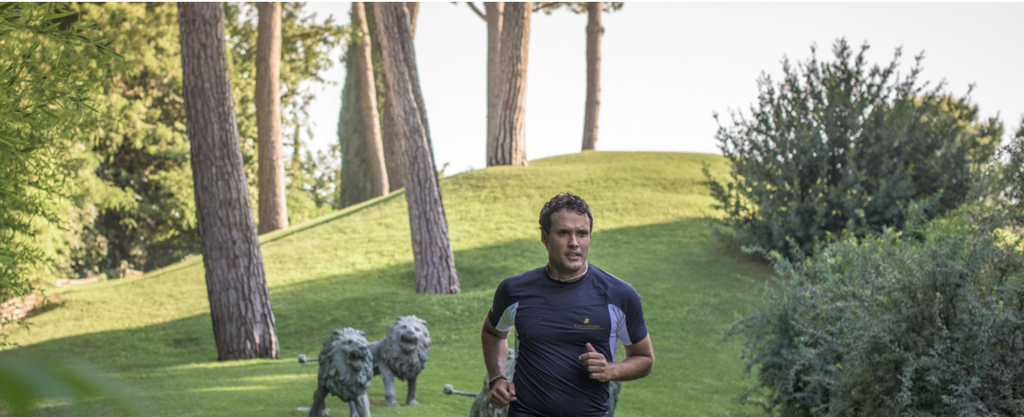
For most, however, the first mission was simpler: coffee.
By early morning, a steady queue had formed for that all-important caffeine fix. In Rome, fortunately, even that comes with a little ceremony. Strong espresso, rich Italian flavors and the unmistakable aroma of freshly brewed coffee provided a welcome reset for travelers still adjusting to new time zones.
Fueled by some of the best caffeine Italy has to offer, the community began to gather.

Uniforms appeared in the lobby. Exhibitors made their final preparations. Delegations reconnected. Handshakes started before registration had fully settled into its rhythm.
There was a sense that the week had properly begun.
And by the time the formal program opened that afternoon, the question at the center of Day One was clear:
How do we turn shared intent into coordinated action?
Across discussions on command structures, multi-domain competition and the changing operational environment, the opening afternoon of the 2026 Global SOF Symposium Europe focused on what it takes to bring people, capabilities and nations together effectively.
With military, government and industry representatives gathered from across Europe and beyond, the conversation moved quickly from organizational structures to the realities facing commanders today.
Working together is no longer simply desirable.
It is operationally necessary.
The Work Starts With Command
Chief Warrant Officer Marco Scopel, Command Senior Enlisted Leader of COFS, and Global SOF
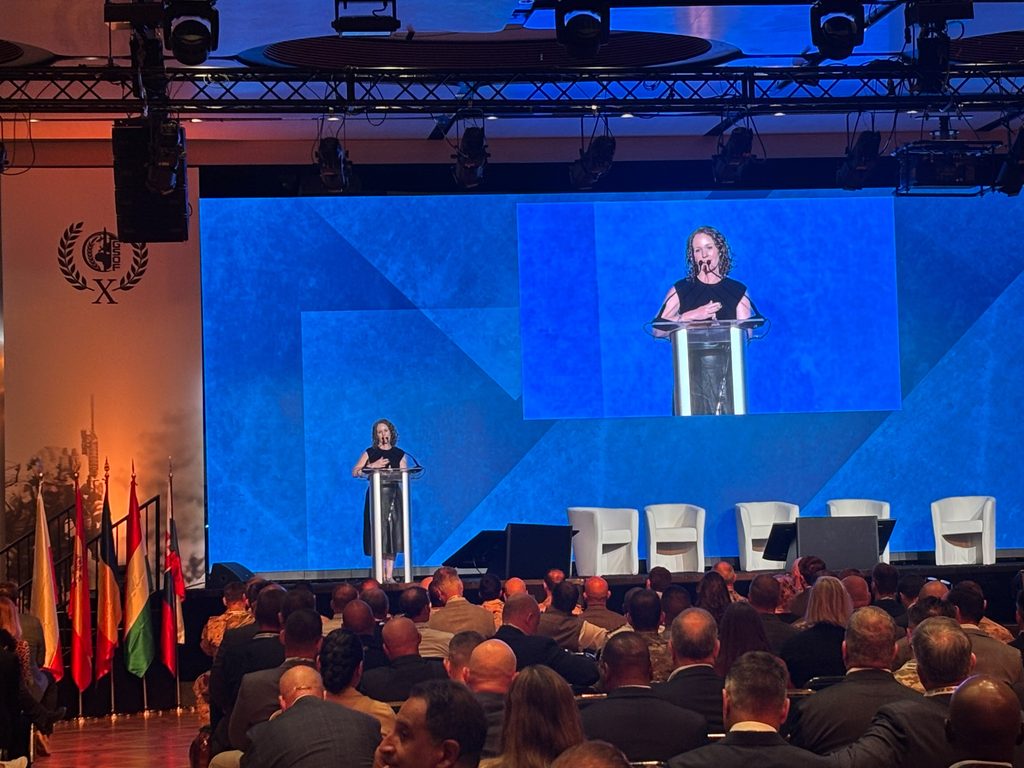
Chief Operating Officer Meaghan Keeler opened the Symposium and welcomed the international SOF community to Rome.
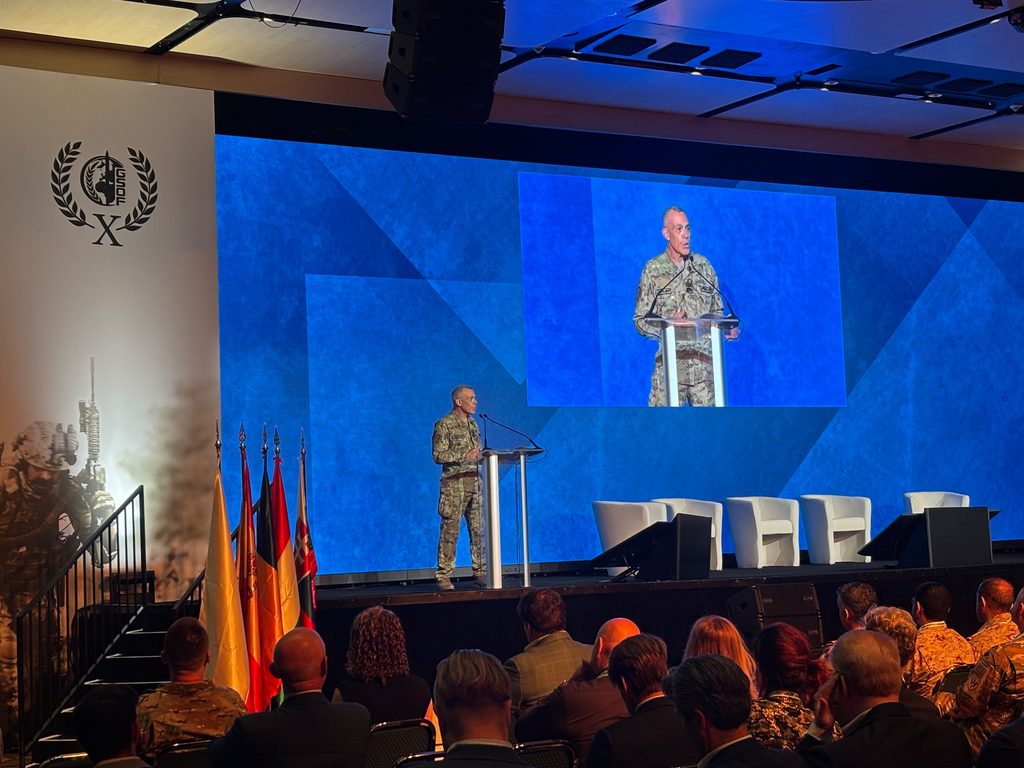
Vice Admiral Paolo Pezzutti, Commander of COFS, then delivered the opening keynote, setting the stage for an afternoon centered on command, integration and cooperation.
The first panel, Anatomy of a Unified Command: Case Studies of SOF Command Structures, examined how different nations organize their Special Operations Forces and what those structures mean in practice.
Moderated by Rear Admiral Massimiliano Rossi, Chief of Staff of Allied Special Operations Forces Command, the discussion brought together Major General Claudiu Dobocan, Commander of Romanian Special Operations Command, and Brigadier General Rickard Johansson, Commander of Swedish Special Operations Command.
Different countries bring different structures, authorities and operational experiences.
But the challenge is shared.
How do commanders create organizations capable of making decisions quickly, integrating partners and responding to an environment that rarely waits for perfect information?
That is not simply a headquarters problem.
Command structures influence how quickly information moves, how effectively capabilities are coordinated and how easily allied and partner forces can operate together.
Ultimately, they shape what happens at the tactical edge.
Competition Has No Single Domain
After a brief pause for coffee, the afternoon widened the lens.
The panel Multi-Domain Challenge: Unifying Effects in Competition looked at an operating environment where traditional boundaries are becoming increasingly difficult to separate.
Land.
Air.
Maritime.
Space.
Cyber.
Information.
Intelligence.
They may still be described as individual domains, but operational effects increasingly depend on how effectively they are connected.
Moderated by Giuliana Ferraino, Editor at Large at Corriere della Sera, the panel brought together Rear Admiral Alessandro Di Blasi, Head of the Collection Branch at the Joint Intelligence Centre; Lieutenant General Giovanni Maria Iannucci, Commander of Joint Operations Command; and Hilton Nunez, Combatant Command Integration Lead for European Command within the Chief Digital and Artificial Intelligence Office.
The conversation reinforced one of the realities shaping modern competition.
No capability operates in isolation.
Information without action has limited value.
Technology without integration has limited value.
Capability without interoperability can quickly become another silo.
The advantage comes from connecting those elements and creating effects across organizations, services and national boundaries.
And increasingly, doing so at speed.
Beyond Interoperability
Interoperability has been a familiar objective across the defense community for years.
Can our systems communicate?
Can our forces operate alongside one another?
Can our processes and procedures align?
Those questions remain critical.
But the environment confronting SOF today increasingly requires something more.
It requires integration.
Can intelligence reach the right decision-maker quickly enough to matter?
Can one nation’s capability contribute immediately to another nation’s operation?
Can emerging technologies be incorporated without creating another disconnected system?
Can commanders combine operational, digital, intelligence and information effects quickly enough to stay ahead of an adversary?
Interoperability allows forces to work alongside one another.
Integration allows them to create an effect together.
That distinction matters.
A Commander’s Perspective
The formal program closed with Admiral Frank “Mitch” Bradley, Commander of U.S. Special Operations Command, bringing the day’s discussions back to the broader strategic and operational environment facing the international SOF community.
His closing keynote provided a fitting end to an afternoon that had moved from the structure of command to the much wider challenge of producing unified effects in an increasingly complex battlespace.
It also reinforced one of the central realities behind this Symposium.
The challenges being discussed in Rome do not belong to any one country.
Threats cross borders.
Technology moves quickly.
Competition takes place across multiple domains at the same time.
No single nation brings every capability, authority or perspective required to address all of it.
The strength of this community comes from what each participant contributes and, more importantly, how effectively those contributions can be connected.
That is why discussions about command structures naturally lead into conversations about multi-domain operations.
It is why technology cannot be separated from the operators who will use it.
And it is why relationships built before a crisis can become a genuine operational advantage when that crisis arrives.
The Agenda Ends. The Conversation Doesn’t.
The formal sessions may have finished for the afternoon, but Day One is far from over.
Tonight, the community moves into the Welcome Reception and Exhibit Halls.
And in many ways, this is where the conversations from the stage begin to take on a different life.
A commander who has spent the afternoon discussing an operational challenge may meet an organization working on part of the solution.
Two nations facing similar problems may discover that they have more in common than they realized.
An introduction tonight may become a CNECT meeting or bilateral engagement later in the week.
A discussion started during a panel may continue over dinner.
These interactions rarely appear on an agenda.
But they are one of the most important reasons this community comes together.
The formal program creates the conversation.
The network keeps it moving.
Building the Connections That Matter
Before arriving in Rome, we talked about unity, shared purpose and the importance of bringing different parts of the SOF community together.
Day One began to put that into practical terms.
Commanders comparing experience.
Operational, intelligence and digital leaders looking at the same challenge from different directions.
International partners examining how their forces can work together more effectively.
Industry listening directly to the people defining the operational problem.
And conversations beginning that may continue long after everyone has left Rome.
That is where the value of the week starts to take shape.
Not simply in agreeing that cooperation matters, but in working through what better cooperation actually requires.
Day One gave us the foundation.
Tonight, the conversations continue.
Tomorrow, we go deeper.
 Concordia in Action
Leave a Reply